LIMITLESS

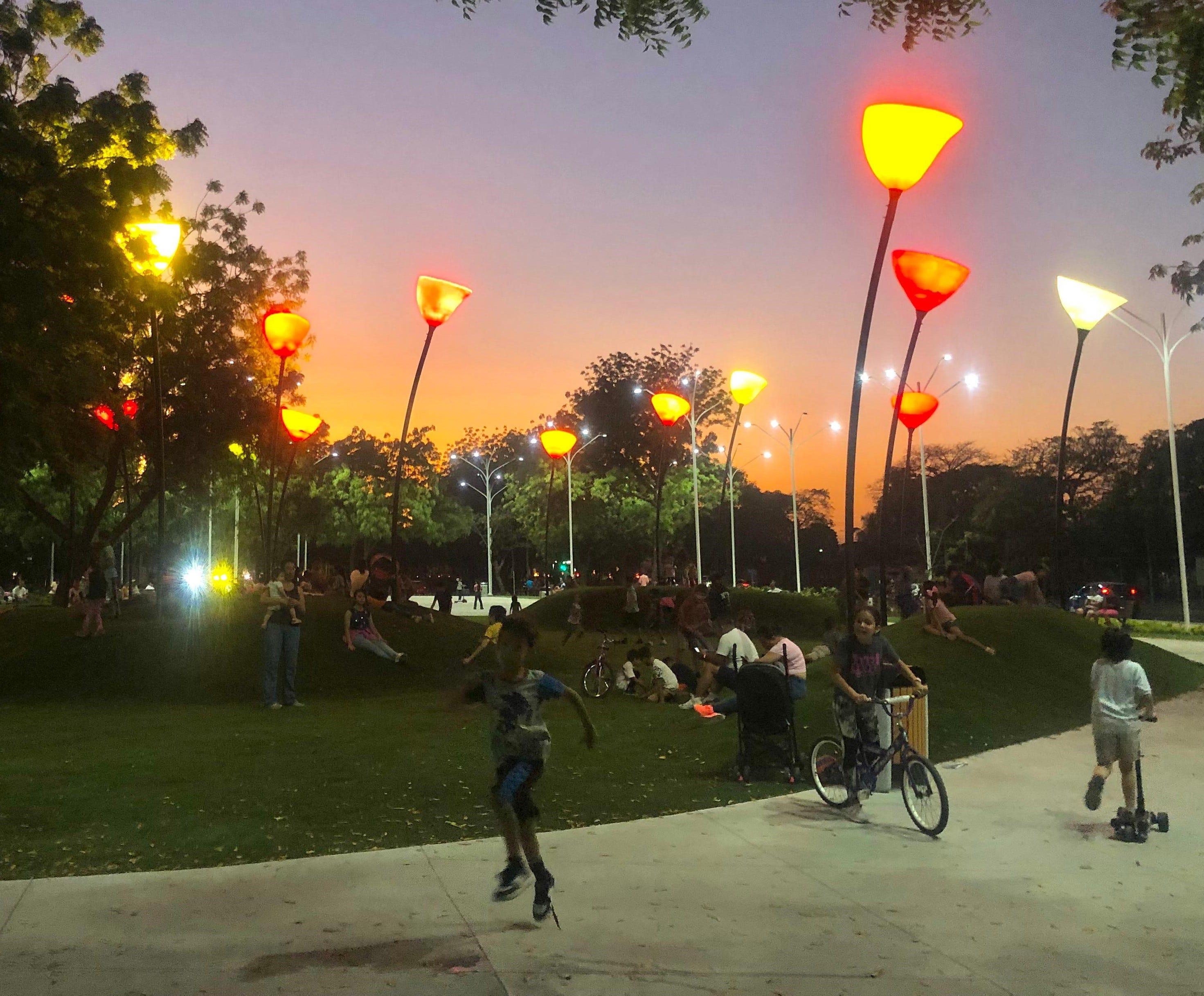
In the heart of Managua, Nicaragua is a new park longer than it is wide where children roll down grassy knolls and around them ride bikes and scooters and chase each other along winding paths, some stopping to drink water from a green hose used to hydrate the rooting gardens during the dry season, temporarily laid among the plants by the park’s attendants as they busy themselves with a variety of other tasks to keep the park sparkling. Towering above the children among the knolls and bending in different directions toward heaven are red and yellow poppy flower sculptures, glowing inside and bathing the children below with their protective amber light. Parents, grandparents, and whole families look on from the benches surrounding these wombs of joy that anchor the park, providing the ultimate layer of protection for these, our most precious and fragile gifts.
I stood there, shook. For months, and a lifetime before that, I have been inundated with the images of what my government produces as its greatest export. This scene in Parque Palestina was the antithesis of that reality. This was the reality in which all feeling people have a right to live. And I know that the people of Nicaragua have fought against my government for far longer than I have walked the earth to create environments such as this one that I experienced one recent and peaceful late Saturday afternoon. To hold back tears, I took pictures. Every minute or so, city buses, many brand new from China—and which cost passengers 2.5 córdobas, or just under 7 US cents to ride—passed by on Pista Gaza, the newly renamed artery in which the park is nestled, honking their horns, evaporating my emergent tears as they reminded me of the many times I have stood or walked in the USA with signs to support various forms of democratic expansion, gaining nothing more than occasional honks myself. Other passing vehicles joined in at what seemed to be both random and regular intervals but none, not even the buses, ever long enough to disturb the bucolic landscape in the nation’s capital. As I experienced and documented the park, I did so keenly aware that I was a guest. A guest who, after 47 years on this earth, finally felt safe and at home. No longer was I protesting for honks. The state-sanctioned reality of Parque Palestina drew the honks to it and to me.
The freedom of these children, running among the poppies, a national symbol of the Palestinian people and how beautifully they are rooted to their land in the face of the most violent form of oppression imaginable, was juxtaposed in my mind with the Palestinian children, slaughtered by my country and currently being starved to death. Surely, some of the children in Parque Palestina know the pangs of death and hunger fueled by US Empire. I personally know some such children—and adults—in the country. Their onlooking parents and the other adults who surround them must also know this feeling. It is intertwined with this experience, I imagine, in part, that Parque Palestina exists. It was this combination of thoughts that welled my tears.
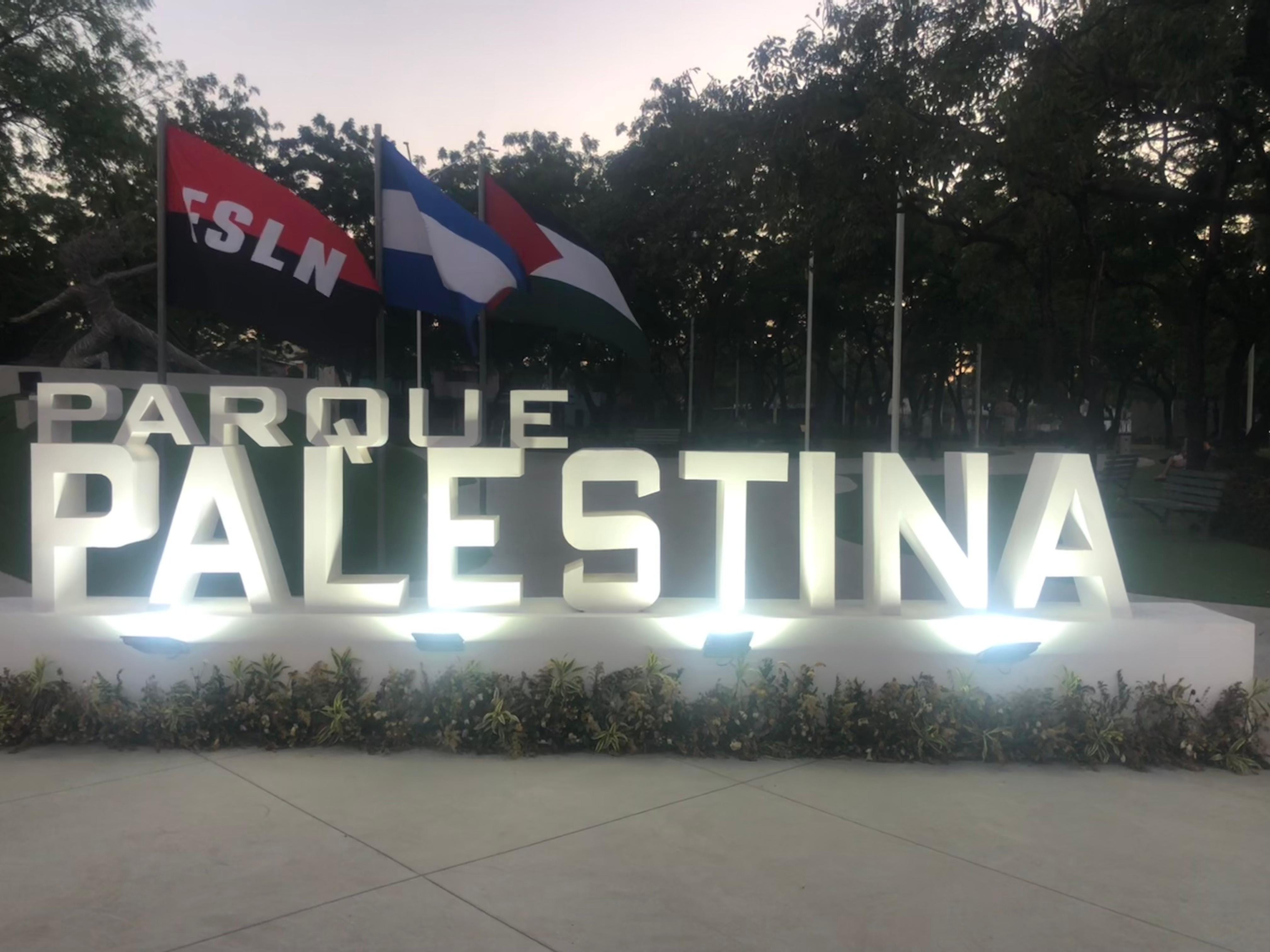
Parque Palestina serves as an immersive reeducation program for those of us visiting from the heart of the empire where even to imagine a world past the US system is penalized. It models what should not need modeling: a world where all children have the right to freely play. But the park is not for us. Our experience is a mere byproduct. It is for the children and their families who live in its vicinity. And yet, Parque Palestina generously allows guests like myself to feel, and deeply so, as we experience it. And it is a real experience, not manufactured to present itself as such. It embodies the power of and role that joy plays in the act of solidarity with those half a world away and with whom the people of Nicaragua are intricately intertwined as primary victims and warriors. It says unabashedly, “This is life.” It is a physical place on this planet for this modeling that is also reality.
In a recent conversation with a loved one in the USA, I told them: I cannot be involved in politics as a guest here. But I will tell you this. If the US Empire tries to hurt a child and I can stand in between, I will, without question, do so. I will intercept the bullets paid for by the stolen labor of that child’s family, my own family’s, and mine to protect them. They replied warning me to be careful so I did not end up in jail. “That’s the opposite of what would happen here if I were to protect a Nicaraguan child from American bullets. And if it is not, so be it. I’ll take the bullets anyway.”
We are all victims of the dehumanizing hate and false reality that continue to flow from the US Empire which seeks to keep its chaotic and chaos-inducing blood-soaked hands and boots on all our necks and minds in perpetuity. Parque Palestina is an antidote to this disease. It is public funds spent to provide the residents of this Managua neighborhood with a safe, beautiful, calm, organized space to gather and play. At the same time, it is a place for visceral reflection, education, and rejuvenation for all who choose that winding path inside its limitless limits. It is a model. And it is real. I am its willing clay.
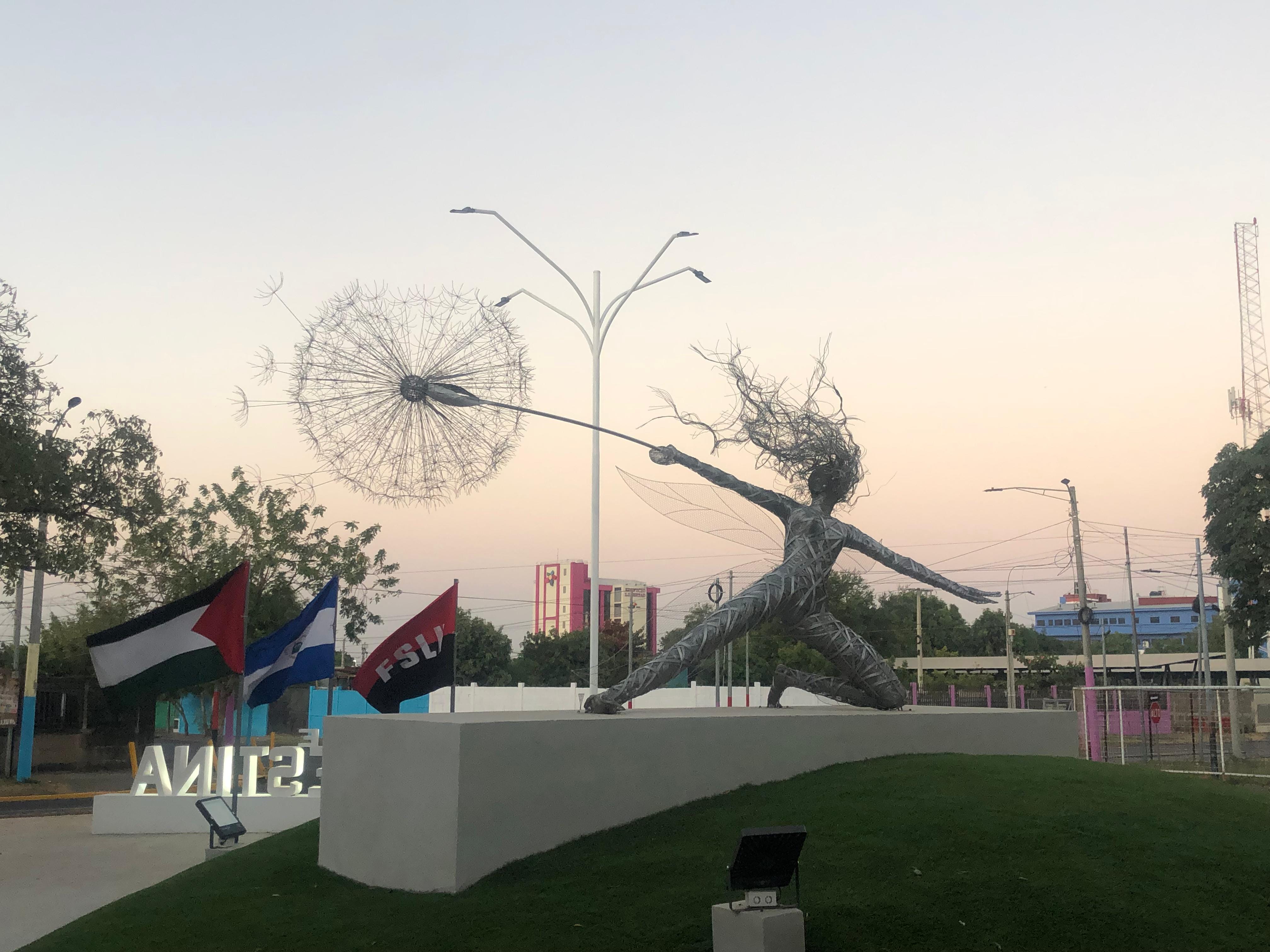
Above: Statue at the northeast entrance of Parque Palestina in Managua, Nicaragua.
“IF I MUST DIE”
BY REFAAT ALAREER
Murdered by the Israeli occupation on December 7, 2023
If I must die,
you must live
to tell my story
to sell my things
to buy a piece of cloth
and some strings,
(make it white with a long tail)
so that a child, somewhere in Gaza
while looking heaven in the eye
awaiting his dad who left in a blaze —
and bid no one farewell
not even to his flesh
not even to himself —
sees the kite, my kite you made, flying up above,
and thinks for a moment an angel is there
bringing back love.
If I must die
let it bring hope,
let it be a story.